G. Cunn. 1926 [1927]
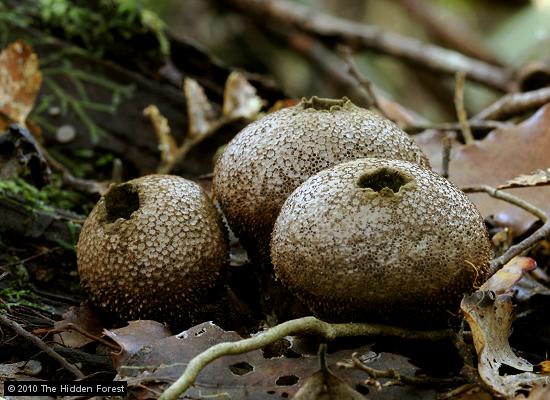
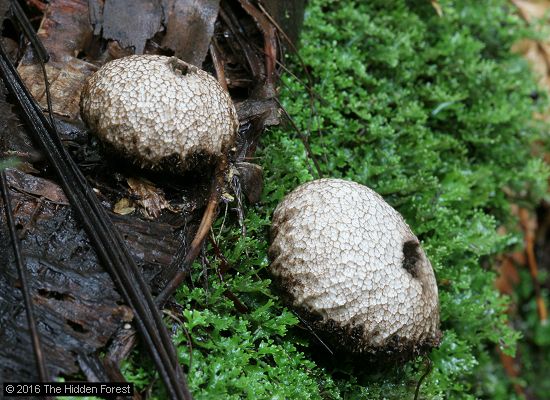
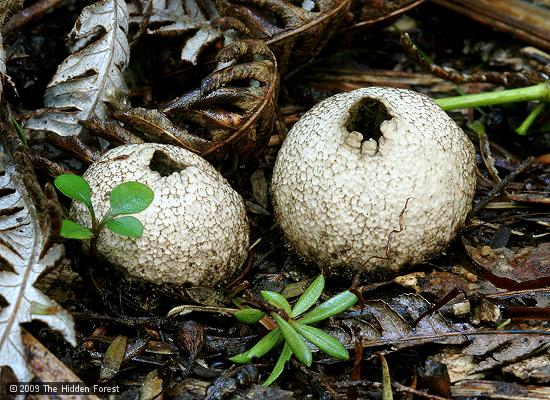
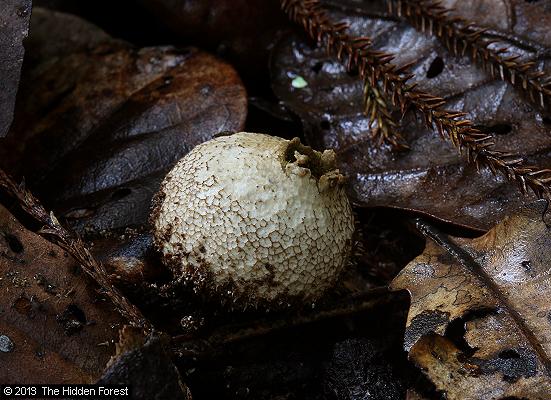
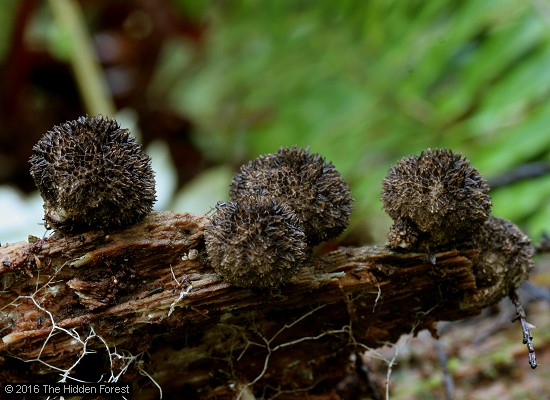
This species was previously known as Morganella compacta but has changed names several times over the years. A small puffball that is found growing on wood and, when immature, is covered in small to large black spines that weather off with age, leaving a darker, reticular pattern over the fruiting body.
Basidiome: Up to 40 mm in diameter, subglobose or pyriform, often depressed above and compressed below into a short, cylindrical base. Brownish tones overall, with darker spines.
Exoperidium: Covered in coarse brown spines, 3-4 mm long. Spines are separate at the base but often converging at the tips. Each spine is surrounded by a ring of minute brown warts or granules. As the fruitbody ages, the spines fall away, leaving the endoperidium reticulated due to the persistent rings of granules.
Endoperidium: Ochraceous to brown, thin and membranous. Opens by a small apical stoma, plane and torn, not raised. Has a sterile base that occupies the short stemlike portion. Ochraceous, minutely cellular, sometimes rudimentary. Diaphragm: Absent.
Gleba: Colour: Olivaceous, becoming powdery at maturity. Texture: Fine and pulverulent. Columella: Small, elliptical.
Common name: None
Habitat: Nothofagus, and Lowland podocarp-broadleaf forest
Substrate: Saprobic, on decaying wood
Distribution: New Zealand
Season: Autumn to early winter
Biostatus: Indigenous
Edible: No
Spore print: Olivaceous