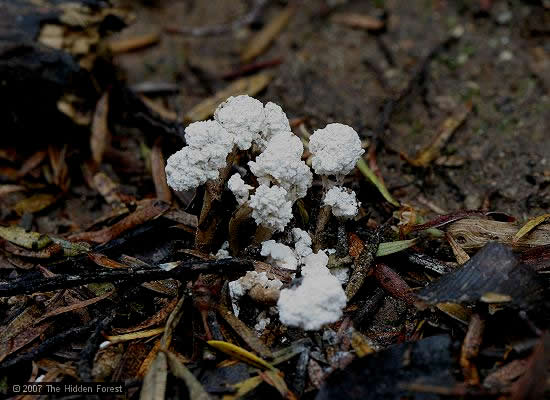
Cordyceps sinclairii
Berk. 1855
Description:
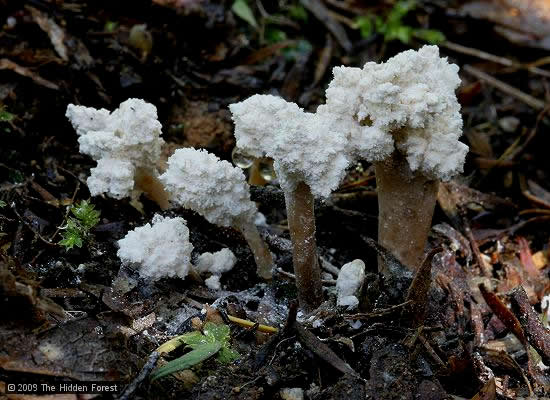
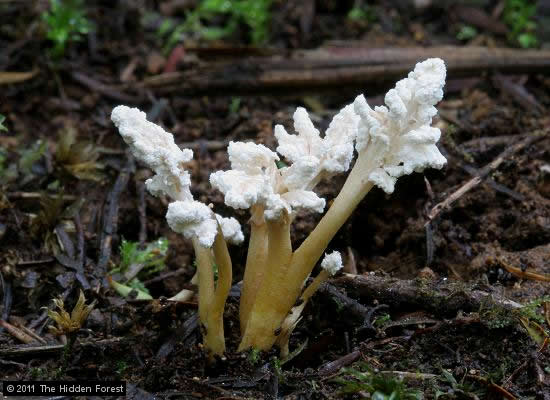
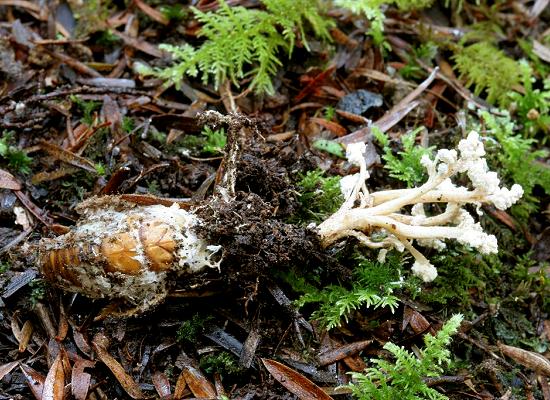
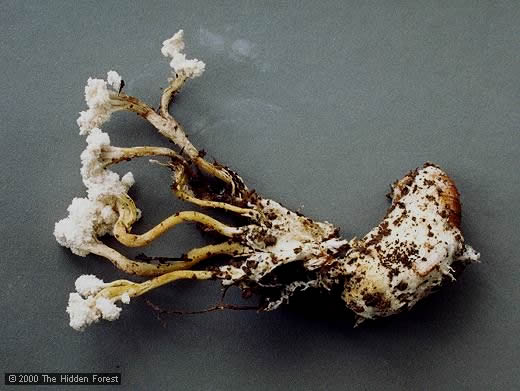
A slender, pale, fibrous Ophiocordyceps parasitic on underground cicada nymphs (Cicadidae). The fungus consumes the buried host and produces one or more pale stromata that emerge above the soil surface. Stromata are white, cream, or pale yellow, sometimes slightly clavate, with immersed perithecia giving a finely roughened texture. Flesh is tough and fibrous, typical of Ophiocordyceps, not soft or brightly coloured like true Cordyceps.

Stroma:30-80 mm long White, cream, or pale yellow Cylindrical, sometimes slightly clavate or curved Surface smooth to finely roughened Perithecia immersed, visible as minute pale dots under magnification Often single, but may be 2–3 from one host
Host: Cicadidae - underground cicada nymphs attached to roots. The host remains buried, and only the stroma emerges above ground.
Colour: Stroma: white to cream to pale yellow. Host: pale, mummified, often with rootlets attached
Size: Stroma: 30-80 mm long, 2-5 mm thick. Host: cicada nymph: 15–30 mm long
Growth habit: Solitary or in small groups. Each stroma arises from a single cicada nymph.

Common name: Vegetable cicada
Habitat: Native forest soils, especially: podocarp–broadleaf forest beech forest damp leaf litter shaded soil with high cicada density Often found where cicada nymphs feed on tree roots.
Substrate: Parasitic on buried cicada nymphs.
Distribution: Endemic to New Zealand, widespread in both North and South Islands.
Season: Most common in autumn and winte.
Biostatus: Endemic to New Zealand.
Macro images:
Cordyceps sinclairii
Scale bar
Scale= 5 mm.
 
Cordyceps sinclairii
Scale bar
Scale= 5 mm.
 
Cordyceps sinclairii
Scale bar
Scale= 7 mm.
 
Cordyceps sinclairii
Scale bar
Scale= 8 mm.
 
Cordyceps sinclairii
Scale bar
Scale= 10 mm.
 
The Hidden Forest
Forest Fungi