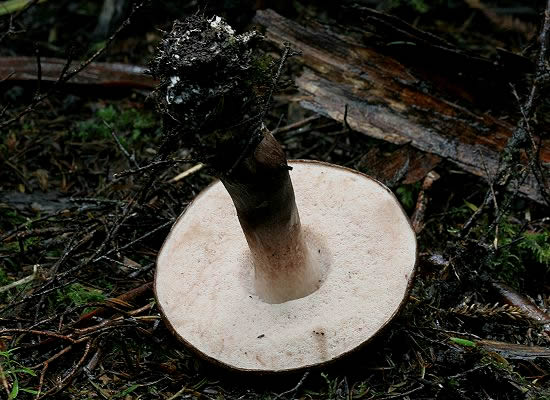
Tylopilus formosus
(G. Stev.) J.A. Cooper (2014)
Description:
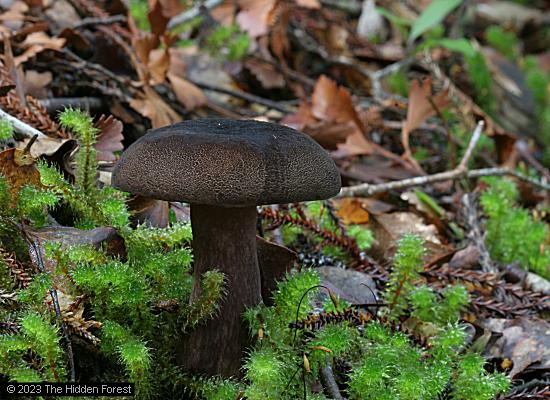
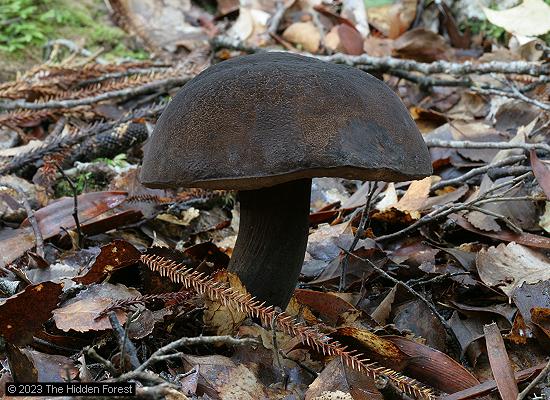
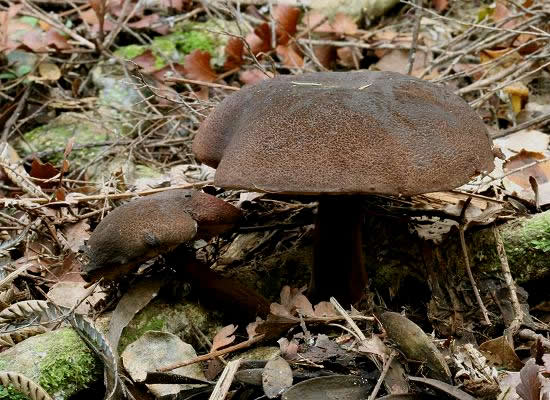
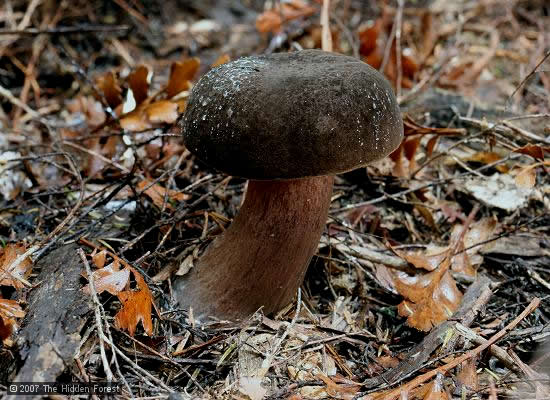
Tylopilus formosus also known as Porphyrellus formosus — is one of New Zealand’s most distinctive boletes: a large, dark, velvety, beech and Tea tree-associated species with pale pores that age golden. It is interesting when found in beech forest, it has a lot of purple tones to it.

Cap: Size: 40-150 mm diameter. Shape: Convex to plano‑convex to sometimes nearly flat at maturity. Surface: Dry, velvety (velutinate); occasionally becomes patchily subglabrous with age. Colour: Dark blackish‑brown to chocolate brown, often with deep purplish tints in beech forest. Margin: Entire, often slightly overhanging the pores; inrolled when young; sterile. Flesh: White, firm, not staining when cut.
Pores & Tubes: Pores: 0.5-1 mm diameter; white to pale pink‑fawn, later golden with age (per modern observations). Tubes: 3-6 mm long; tube layer easily separable; depressed around the stipe. Spore print: Nearly colourless with a faint pink‑fawn tint
Stipe: Size: 40-80 x 15-30 mm. Colour: Same dark blackish‑brown, velvety like the cap; white at the base. Shape: Tapering upwards. Surface: Lacks the dermatocystidia of the cap; hyphal ends pigmented; some trichocystidia present.

Common name: Dark Velvet Bolete
Habitat: Under Leptospermum and Nothofagus forest
Substrate: Soil under host trees
Distribution: New Zealand wide.
Season: Autumn
Biostatus: Endemic
Edible: Unknown
Spore print: Brown
Macro images:
Tylopilus formosus
Scale bar
Scale= 13.5 mm.
 
PorTylopilus formosus
Scale bar
Scale= 16 mm.
 
Tylopilus formosus
Scale bar
Scale= 18 mm.
 
Tylopilus formosus
Scale bar
Scale= 13 mm.
 
Tylopilus formosus
Scale bar
Scale= 15 mm.
 
The Hidden Forest
Forest Fungi